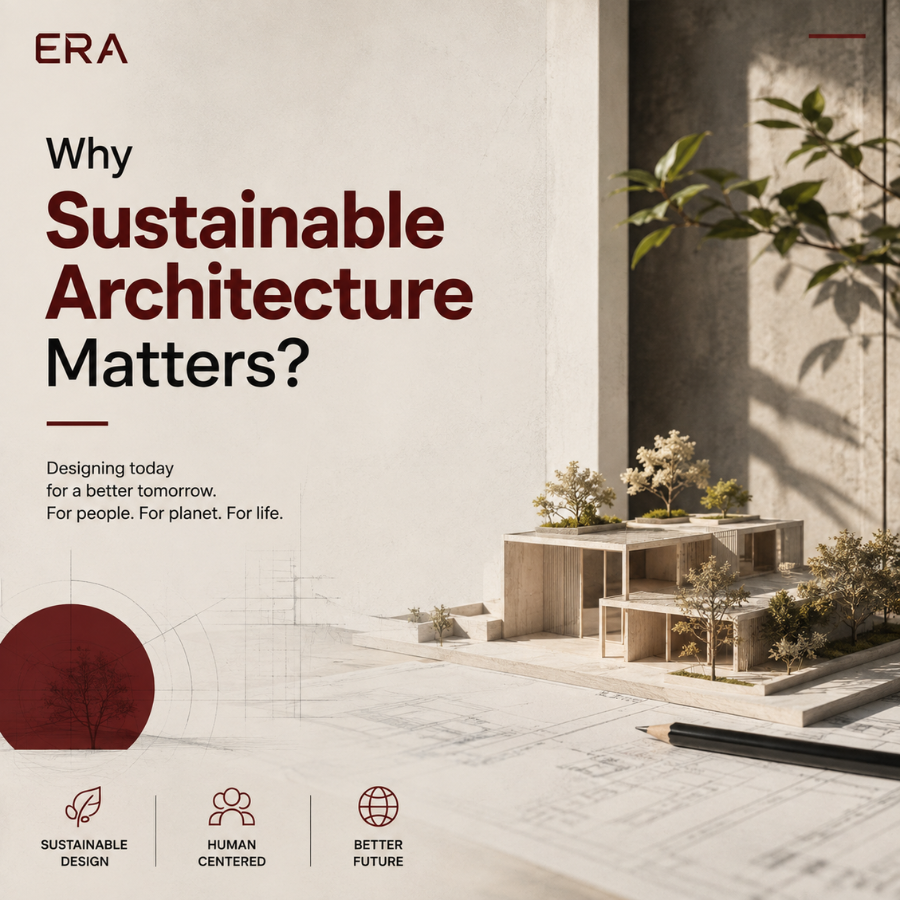
Sustainable Architecture is changing the way we design, build, and experience the built environment. More than reducing energy use or adding green technologies, it is about creating buildings that respond to people, place, and the planet in a thoughtful and lasting way. From homes and workplaces to public spaces, sustainable design balances environmental responsibility with comfort, performance, and long-term value.
In this guide, we’ll explore the principles of Sustainable Architecture, the strategies behind high-performing buildings, and the ideas shaping a more resilient future for architecture.
In This Article
- What Is Sustainable Architecture?
- What Makes Architecture Truly Sustainable?
- Sustainable Design Strategies in Practice
- Sustainability Across Different Building Types
- The Defining Characteristics of Sustainable Architecture
- The Challenges of Sustainable Architecture
- The Future of Sustainable Architecture
- From Our Studio
- Further Reading
What Is Sustainable Architecture?
Sustainable Architecture is an approach to designing buildings that minimizes environmental impact while creating healthier, more efficient, and longer-lasting spaces for people. It considers every stage of a building’s life, from planning and material selection to construction, operation, and eventual reuse. Rather than focusing on a single feature, sustainable design brings together environmental responsibility, economic performance, and human well-being.
While the term is often associated with solar panels or green roofs, Sustainable Architecture goes far beyond individual technologies. It begins with thoughtful design decisions, such as orienting a building to maximize natural light, improving insulation, selecting durable materials, and reducing energy and water consumption. These strategies work together to create buildings that perform efficiently while providing comfortable environments for their occupants.
Sustainable architecture also responds to its surrounding context. Climate, local materials, biodiversity, and community needs all influence how a building is designed. By working with natural conditions instead of against them, architects can reduce resource consumption while creating spaces that feel connected to their environment.
As cities continue to grow and climate challenges become more urgent, Sustainable Architecture is no longer considered a specialist approach. It has become a fundamental part of modern architectural practice, helping shape buildings that are resilient, adaptable, and designed to support both present and future generations.
What Makes Architecture Truly Sustainable?
Creating a sustainable building involves far more than reducing energy consumption or installing renewable technologies. Sustainable Architecture is shaped by a series of design decisions that influence how a building performs throughout its entire lifespan. From its relationship with the climate to the materials it uses and the experience it provides for occupants, true sustainability is achieved when environmental, social, and economic considerations work together from the very beginning of the design process.
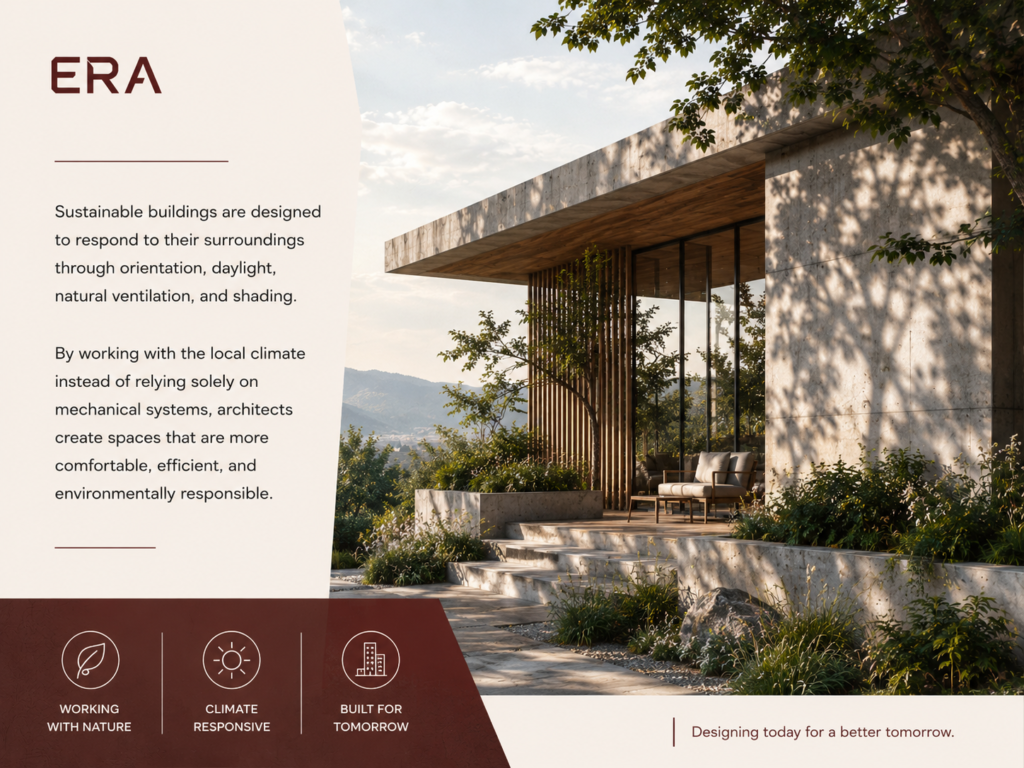
Designing with Climate
Sustainable buildings begin by responding to their environment rather than resisting it. Site orientation, daylight, natural ventilation, shading, and thermal performance all influence how a building interacts with the local climate. By working with natural conditions, architects can reduce energy demand while improving indoor comfort throughout the year.
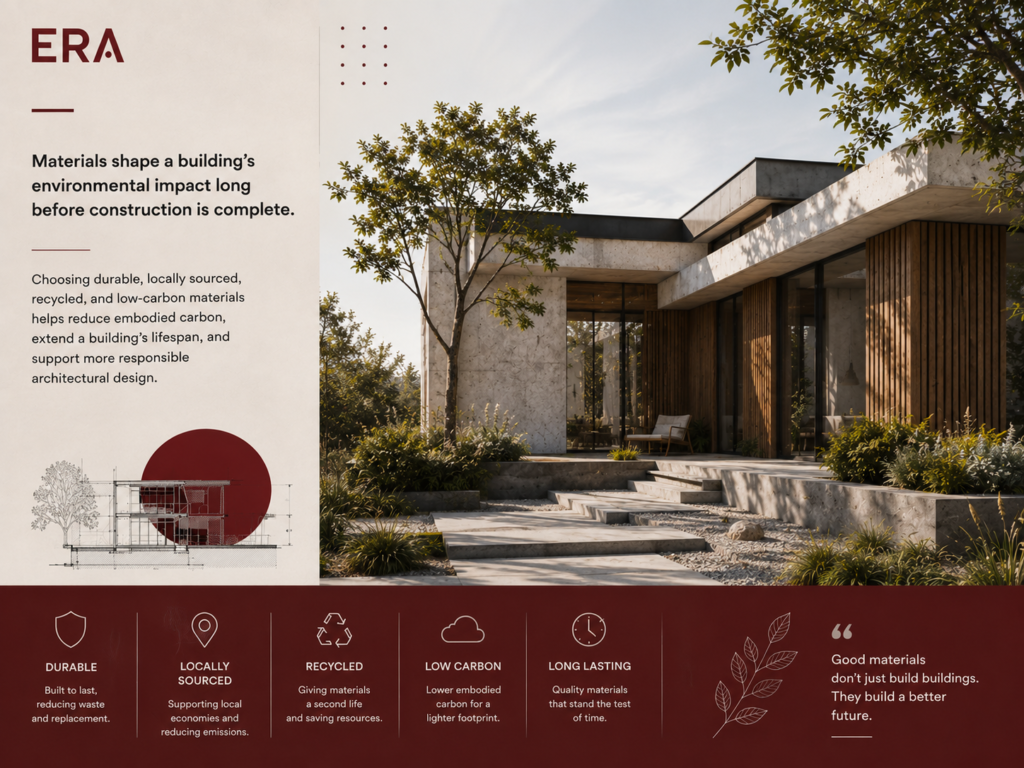
Choosing Materials Responsibly
Material selection has a lasting impact on a building’s environmental footprint. Durable, locally sourced, recycled, and low-carbon materials can reduce embodied carbon while extending the building’s lifespan. Responsible choices also consider maintenance, durability, and the potential for materials to be reused or recycled in the future.
Designing for People
Sustainability is equally about human wellbeing. Healthy indoor environments, abundant natural light, good air quality, acoustic comfort, and accessible spaces all contribute to a better quality of life. A successful Sustainable Architecture project creates buildings that are comfortable, productive, and enjoyable to occupy for decades.
Thinking Beyond Today
A truly sustainable building is designed for the future. Flexible layouts, adaptable spaces, resilient construction, and efficient building systems allow architecture to respond to changing technologies, climates, and user needs. By planning beyond immediate requirements, architects create buildings that remain relevant and valuable over time.
Sustainable Design Strategies in Practice
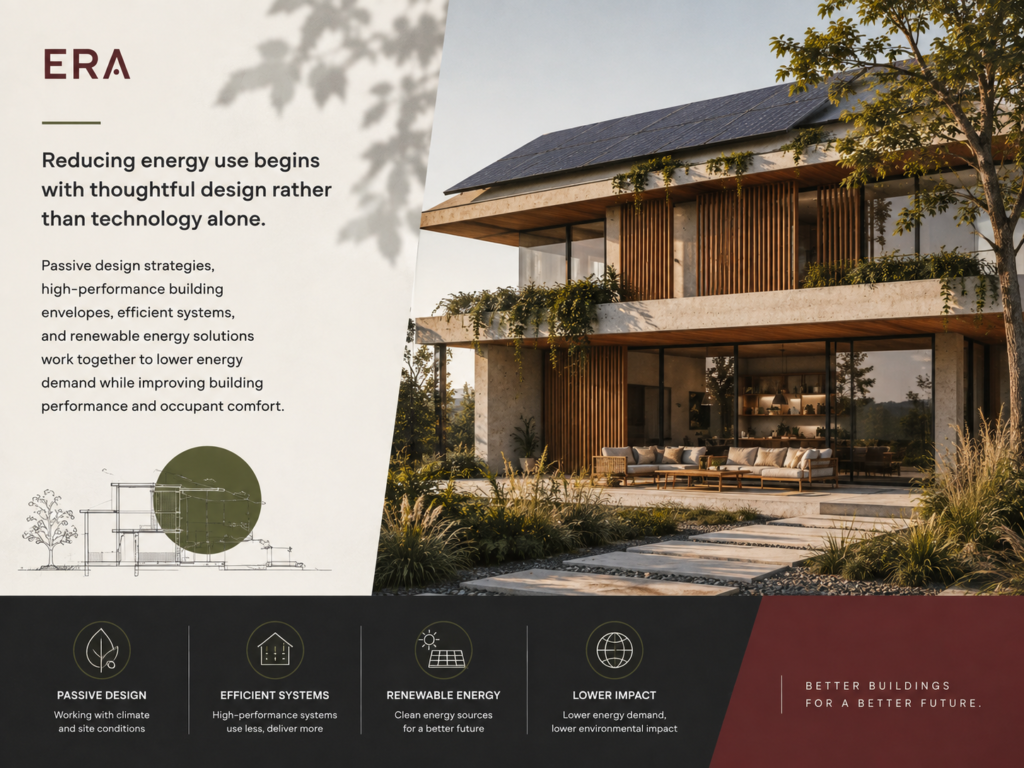
Every sustainable building combines a range of design strategies rather than relying on a single solution. The most effective projects integrate passive design, efficient building systems, responsible material choices, and landscape planning from the earliest stages of the design process. When these strategies work together, Sustainable Architecture becomes both environmentally responsible and highly functional.
Passive Design is often the first step. By carefully considering building orientation, natural daylight, shading, insulation, and ventilation, architects can reduce energy demand before mechanical systems are introduced. These decisions improve comfort while lowering long-term energy consumption.
Energy Efficient Systems complement passive strategies by reducing the building’s operational impact. High-performance HVAC systems, efficient lighting, renewable energy technologies, and smart building controls help optimize energy use while maintaining occupant comfort.
Responsible Material Selection focuses on choosing materials with lower environmental impacts throughout their lifecycle. Recycled content, responsibly sourced timber, low-carbon concrete, and locally produced materials all contribute to reducing embodied carbon while improving durability and long-term performance.
Water Sensitive Design helps conserve one of the world’s most valuable resources. Rainwater harvesting, efficient plumbing fixtures, permeable surfaces, and landscape strategies reduce water consumption while improving stormwater management.
Landscape Integration and Sustainability in Architecture extend sustainability beyond the building itself. Native planting, green roofs, shaded outdoor spaces, and biodiversity-friendly landscapes improve environmental performance while creating healthier, more resilient, and enjoyable places for people while strengthening the relationship between buildings and their natural environment.
Sustainability Across Different Building Types
While the principles of Sustainable Architecture remain consistent, the way they are applied varies across different building types. Every project has unique performance requirements, user expectations, and environmental challenges. As a result, sustainable design strategies must respond to the specific function of each building rather than following a single approach.
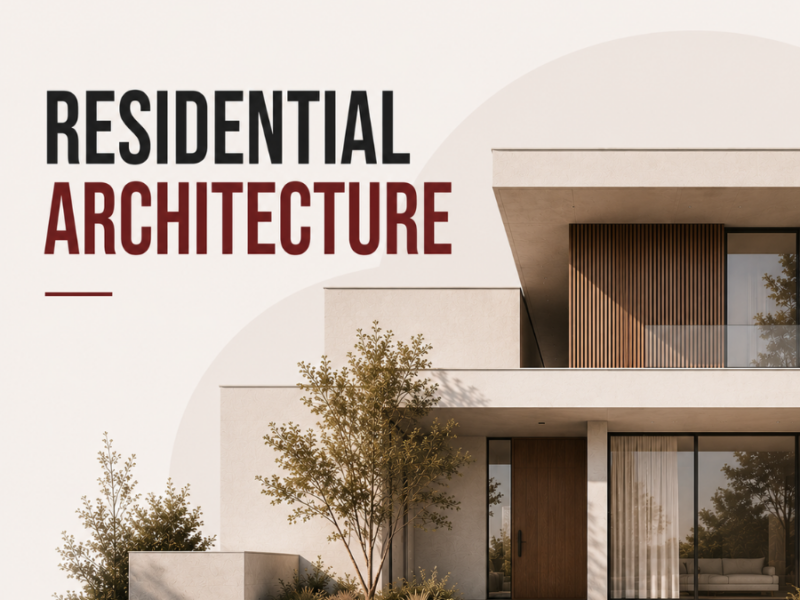
Residential Buildings prioritize energy efficiency, indoor comfort, and healthy living environments. Passive design, high-performance insulation, natural ventilation, and renewable energy systems help homeowners reduce energy consumption while improving everyday comfort.
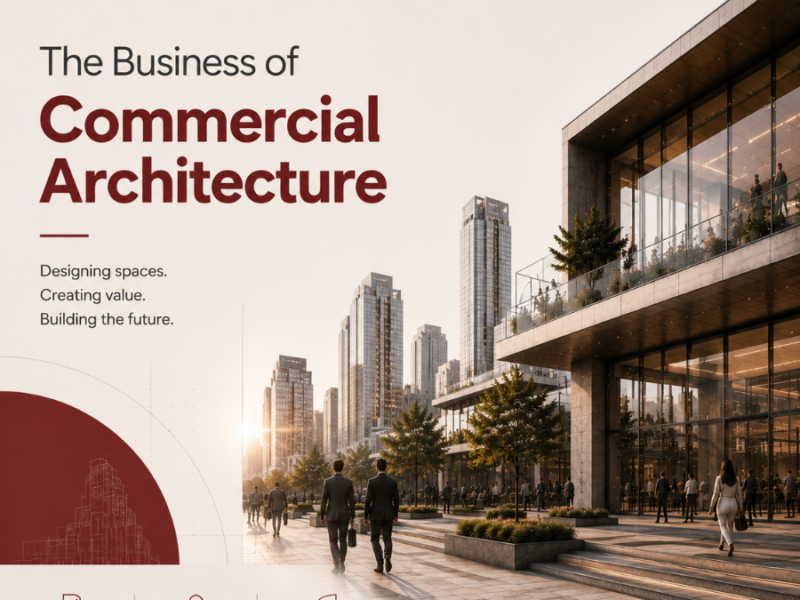
Commercial Buildings balance sustainability with operational efficiency and business performance. Flexible floor plans, smart building technologies, efficient lighting, and durable materials help businesses lower operating costs while creating healthier and more productive workplaces.
Educational Facilities focus on creating healthy learning environments through daylight, natural ventilation, acoustic comfort, and adaptable spaces. Sustainable schools and universities also serve as educational tools by demonstrating responsible environmental practices to students and communities.
Healthcare Buildings require carefully controlled indoor environments while maintaining high levels of energy performance. Efficient building systems, resilient materials, access to natural light, and biophilic design contribute to patient wellbeing, staff comfort, and long-term operational efficiency.
Hospitality and Mixed-Use Developments combine sustainability with memorable user experiences. Hotels, restaurants, and mixed-use projects increasingly integrate renewable energy, water conservation, green roofs, and landscape design to create destinations that are environmentally responsible while remaining commercially successful.
The Defining Characteristics of Sustainable Architecture
While every project is unique, the most successful examples of Sustainable Architecture share a set of defining characteristics. These qualities guide design decisions throughout the project, helping architects create buildings that perform efficiently, respond to their environment, and continue delivering value over time. Rather than relying on a single technology or certification, sustainable buildings combine thoughtful planning with long-term thinking.
Climate Responsive Design
Sustainable buildings are designed to work with their local climate rather than against it. Building orientation, natural daylight, ventilation, shading, and thermal performance all contribute to reducing energy demand while improving indoor comfort throughout the year.
Resource Efficiency
Efficient use of energy, water, and building materials is a fundamental characteristic of sustainable design. By reducing resource consumption and minimizing waste, architects create buildings that lower environmental impact while supporting long-term operational performance.
Healthy Indoor Environments
A sustainable building should improve the wellbeing of the people who use it. Access to natural light, fresh air, thermal comfort, acoustic quality, and carefully selected materials all contribute to healthier and more enjoyable spaces for living, working, and learning.
Adaptability and Longevity
Buildings designed for the future are better equipped to respond to changing needs. Flexible layouts, durable construction, and resilient building systems allow spaces to evolve over time, extending their lifespan while reducing the need for major renovations and unnecessary resource consumption.
The Challenges of Sustainable Architecture
Creating a sustainable building is rarely about applying a single solution. Every project requires architects to balance environmental responsibility, technical performance, financial considerations, and the needs of the people who will use the space. While the principles of Sustainable Architecture are well established, applying them successfully often involves navigating a range of design challenges and project constraints.
Balancing Performance and Budget
Sustainable design often requires careful investment rather than simply increasing project costs. Architects evaluate which strategies provide the greatest long-term value, balancing upfront expenses with reduced operating costs, improved energy performance, and lower maintenance requirements. The goal is to create buildings that are both environmentally responsible and financially sustainable.
Responding to Site and Climate
Every site presents unique opportunities and constraints. Climate, orientation, topography, surrounding buildings, and local planning regulations all influence how sustainable strategies can be applied. Instead of following a universal approach, Sustainable Architecture responds to these conditions to create buildings that perform efficiently within their specific environment.
Choosing the Right Materials
Selecting sustainable materials involves more than choosing products with environmental certifications. Architects consider durability, embodied carbon, local availability, maintenance, and lifecycle performance to ensure materials contribute to the building’s overall sustainability while meeting functional and aesthetic requirements.
Designing for Long Term Adaptability
Buildings should be designed to evolve alongside changing technologies, regulations, and user needs. Flexible layouts, resilient construction, and adaptable building systems help extend a building’s lifespan while reducing the need for major renovations. By planning for the future, Sustainable Architecture creates spaces that continue to perform well for decades.
The Future of Sustainable Architecture
As environmental priorities continue to shape the built environment, Sustainable Architecture is becoming a fundamental part of how buildings are designed, constructed, and experienced. The focus is expanding beyond reducing environmental impact to creating buildings that are regenerative, adaptable, and capable of supporting healthier communities. Rather than treating sustainability as a design trend, architects are increasingly integrating it into every stage of the project.
Advances in building technologies, material innovation, renewable energy, and digital design tools are opening new possibilities for architecture. At the same time, greater attention is being given to circular construction, climate resilience, and long-term building performance. These developments are helping architects create spaces that use fewer resources while delivering greater value throughout their lifecycle.
Looking ahead, the future of architecture will be defined by buildings that work in harmony with both people and the environment. As cities grow and global challenges evolve, Sustainable Architecture will continue to shape a built environment that is more resilient, efficient, and prepared for the generations to come.
From Our Studio
At ERA Render, we believe sustainability begins with thoughtful design. Whether we’re developing residential, commercial, or mixed-use projects, our approach focuses on creating spaces that balance functionality, environmental responsibility, and architectural quality. Through design, visualization, and careful planning, we help clients bring sustainable ideas to life with clarity and confidence.
Further Reading
For readers interested in exploring Sustainable Architecture in greater depth, these books provide valuable insights into environmental design, building performance, and the future of sustainable construction.
- Victor Olgyay — Design with Climate
- Jason F. McLennan — The Philosophy of Sustainable Design
- Charles J. Kibert — Sustainable Construction: Green Building Design and Delivery
- William McDonough & Michael Braungart — Cradle to Cradle: Remaking the Way We Make Things
- Brenda and Robert Vale — Green Architecture: Design for a Sustainable Future