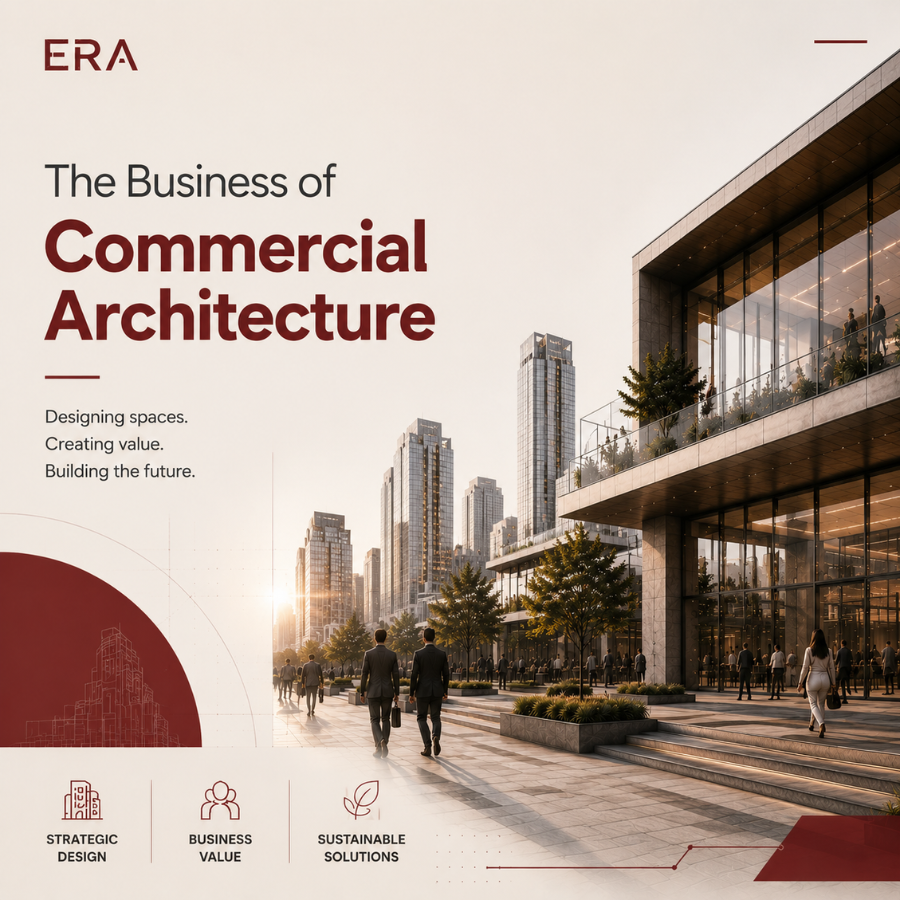
Commercial Architecture shapes the places where people work, shop, dine, stay, and connect. From offices and retail spaces to hotels and mixed-use developments, every project is designed to balance functionality, user experience, and business goals while responding to its surrounding environment.
In this guide, we’ll explore the principles of Commercial Architecture, how commercial buildings are designed, the different types of commercial spaces, and the trends shaping the future of workplace and business environments.
In This Article
- What Is Commercial Architecture?
- The Purpose Behind Commercial Architecture
- Designing for Business, People, and Place
- From Concept to Construction
- Commercial Buildings for Different Industries
- Commercial Architecture in a Changing World
- The Future of Commercial Architecture
- From Our Studio
- Further Reading
What Is Commercial Architecture?
Commercial Architecture is the design of buildings used for business, public services, and commercial activities. These spaces range from offices and retail stores to restaurants, hotels, healthcare facilities, educational buildings, and mixed-use developments. Unlike residential projects, which are designed around everyday living, commercial buildings must balance business objectives, user experience, operational efficiency, and long-term performance.
Every commercial project begins with understanding how a space will be used. Architects consider factors such as the building’s purpose, the people who will occupy it, customer journeys, accessibility, safety, and local regulations before developing a design. These decisions influence everything from the building’s layout and circulation to its appearance, environmental performance, and adaptability over time.
Commercial architecture also plays an important role in shaping how businesses are perceived. A well-designed office can encourage collaboration, a thoughtfully planned retail store can improve the customer experience, and a welcoming hotel can leave a lasting impression on its guests. Beyond functionality, architecture helps communicate a brand’s identity while creating environments that are efficient, comfortable, and memorable.
As cities continue to grow and business needs evolve, Commercial Architecture is becoming increasingly focused on flexibility, sustainability, and human-centered design. Today’s commercial buildings are expected to do more than support business operations, they must create places where people can work, interact, and thrive while responding to the changing demands of the built environment.
The Purpose Behind Commercial Architecture
Commercial buildings are more than places where business happens. They influence how people work, shop, learn, dine, and interact, shaping everyday experiences while supporting the goals of the organizations that occupy them. At its best, Commercial Architecture brings together functionality, efficiency, and design to create spaces that perform well for both businesses and the communities they serve.
Supporting Business Goals
Every commercial project is designed with a purpose. Whether it’s increasing workplace productivity, improving customer flow, or creating a memorable retail experience, architecture helps businesses operate more effectively. Thoughtful planning, efficient layouts, and flexible spaces allow buildings to adapt to changing needs while supporting long-term growth.
Designing Better User Experiences
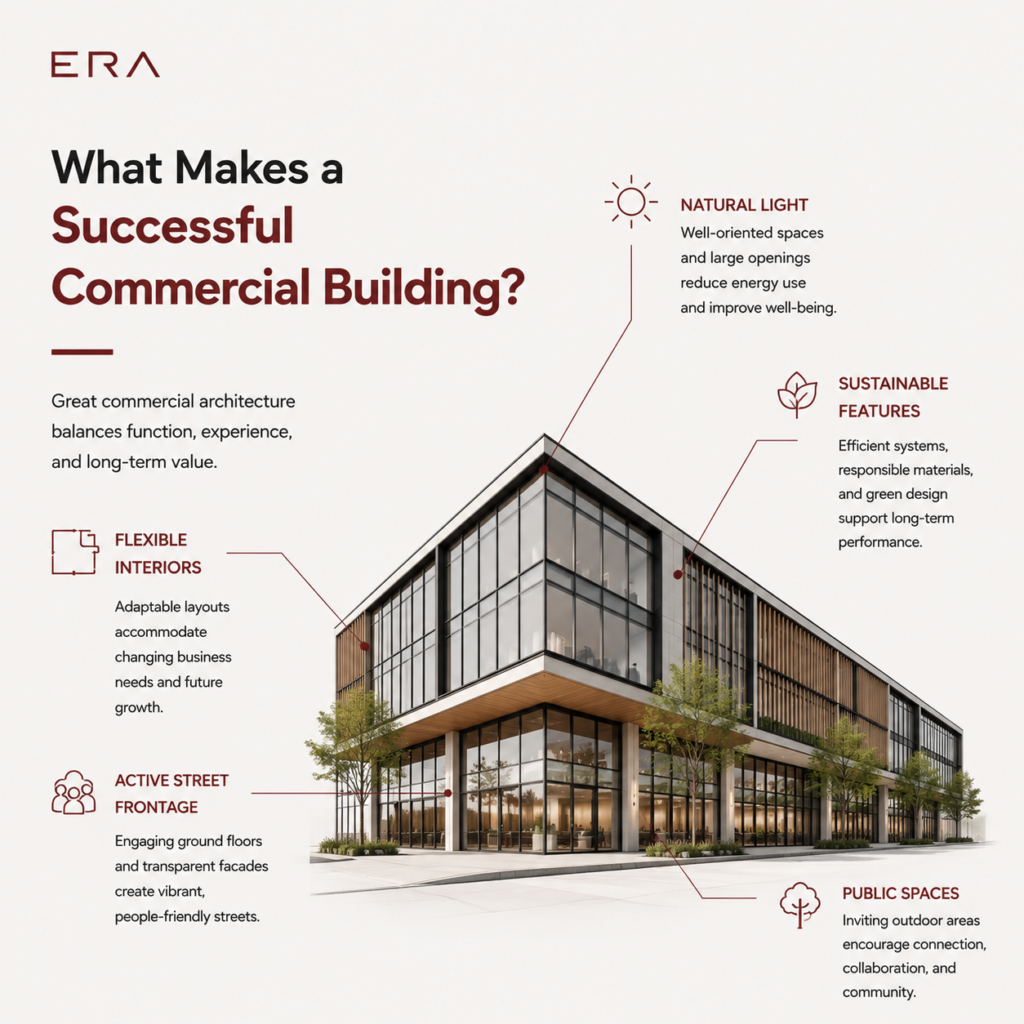
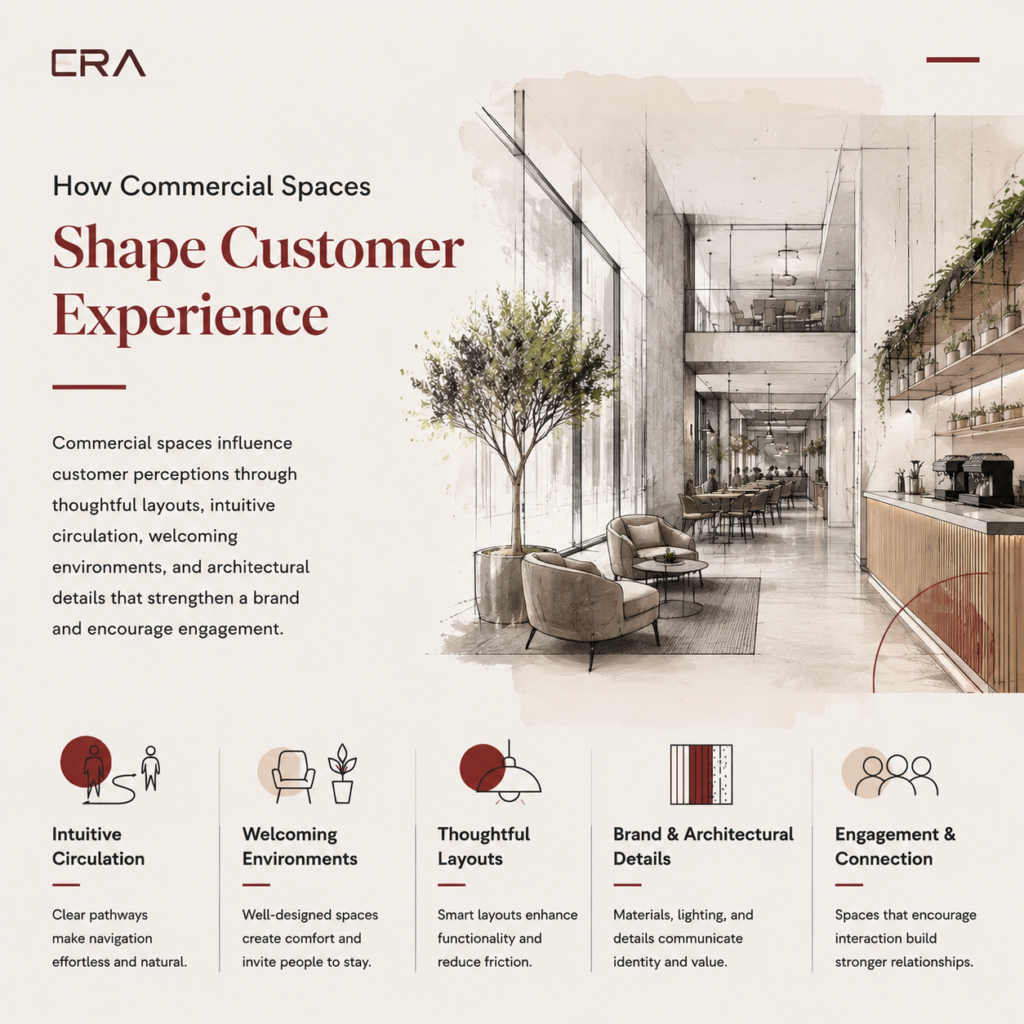
Successful commercial designs are designed around the people who use them. Clear circulation, comfortable environments, natural light, accessibility, and intuitive wayfinding all contribute to a better experience for employees, customers, visitors, and tenants. When people can move through a space naturally and comfortably, the building becomes more functional and enjoyable to use.
Architecture as Brand Identity
A building is often the first physical expression of a business or organization. Its architecture communicates values, professionalism, and character before anyone steps inside. Through material selection, spatial design, and visual identity, Commercial Architecture helps businesses create environments that strengthen their brand while leaving a lasting impression on clients, customers, and visitors.
Designing for Business, People, and Place
Every commercial building must respond to more than a single brief. It needs to support business objectives, provide a positive experience for the people who use it, and contribute to its surrounding environment. These priorities influence every architectural decision, from the earliest concept through to the completed building. The most successful examples of Commercial Architecture balance operational performance with architectural quality, creating spaces that remain effective as businesses, technologies, and communities evolve.
Business Comes First. Commercial architecture begins by understanding the purpose of the project. Whether it’s an office, retail store, hotel, or healthcare facility, the design must support the organization’s operations, strengthen its identity, and allow the business to evolve over time. Spatial planning, flexibility, and efficiency all contribute to how well a building performs, helping businesses adapt to changing markets, new technologies, and future growth without compromising the quality of the environment.
People Shape the Experience. The success of a commercial design is measured by how well it serves its users. Clear circulation, accessibility, natural light, comfort, and intuitive layouts all influence how employees, customers, and visitors experience the space. Architecture should make these interactions feel effortless while creating environments that encourage productivity, collaboration, and positive customer experiences. When people feel comfortable navigating and occupying a space, they are more likely to engage with it and return.
Place Gives a Building Meaning. Every commercial design exists within a wider context. Climate, surrounding buildings, public spaces, local culture, and urban character all influence how architecture responds to its site. Rather than standing apart from its surroundings, the strongest commercial buildings contribute positively to the neighborhoods and communities they become part of. By respecting context while expressing a distinct architectural identity, commercial buildings can strengthen the public realm and create lasting value beyond the boundaries of the site.
From Concept to Construction
Every commercial project follows a structured design process, but no two developments are exactly alike. The scale of the project, the type of business, planning requirements, and operational needs all influence the journey from the first idea to the completed building. Throughout this process, Commercial Architecture balances creative design with technical coordination, ensuring that the finished space is both functional and commercially successful.
Discovery begins with understanding the client’s vision, business objectives, site conditions, and regulatory requirements. Architects gather information about how the building will operate, who will use it, and what challenges or opportunities the site presents. This early stage establishes the foundation for every design decision that follows.
Concept Development explores the overall direction of the project. Architects develop initial layouts, building forms, circulation strategies, and design concepts that respond to the client’s goals while considering functionality, flexibility, and the surrounding context. Different ideas are evaluated before refining a preferred solution.
Design Development transforms the concept into a coordinated architectural proposal. Floor plans, elevations, material selections, and technical systems are developed alongside structural, mechanical, and environmental considerations. During this phase, the commercial design becomes increasingly detailed, ensuring every element works together as a cohesive whole.
Construction Documentation translates the design into detailed drawings and specifications that guide contractors throughout the building process. These documents communicate dimensions, materials, construction methods, and technical requirements, reducing uncertainty and helping maintain the integrity of the design.
Construction and Project Delivery is where architecture becomes reality. Architects continue to collaborate with consultants, contractors, and clients by reviewing construction progress, resolving site conditions, and ensuring the completed building reflects the original design intent while meeting quality and performance expectations.
A clear design process allows commercial projects to move efficiently from concept to completion. By combining strategic planning, technical expertise, and collaboration, Commercial Architecture creates buildings that support businesses, enhance user experiences, and remain valuable assets for years to come.
Commercial Buildings for Different Industries
Commercial Architecture encompasses a wide range of building types, each designed to support different business activities and user needs. While every project has unique requirements, successful commercial buildings balance operational efficiency, user experience, and long-term adaptability. From workplaces and retail environments to hospitality and healthcare facilities, architecture plays a vital role in shaping how these spaces function and perform.
Office Buildings
Modern offices are designed to support productivity, collaboration, and employee well-being. Flexible workspaces, natural light, meeting areas, and adaptable layouts help organizations respond to evolving ways of working while creating environments that attract and retain talent.
Retail and Shopping Spaces
Retail architecture focuses on creating engaging customer experiences while supporting efficient operations. Store layouts, product displays, circulation, and storefront design all influence how visitors interact with a brand and move through a space, contributing to both customer satisfaction and commercial success.
Hospitality Projects
Hotels, restaurants, cafés, and resorts are designed to deliver memorable guest experiences. Hospitality architecture in commecrial design combines functionality with atmosphere, ensuring that circulation, comfort, aesthetics, and operational requirements work together to support both visitors and staff.
Healthcare Facilities
Healthcare architecture prioritizes patient comfort, staff efficiency, and clinical performance. Hospitals, medical offices, and wellness centers require carefully planned layouts that improve accessibility, streamline workflows, and create welcoming environments that support care and recovery.
Mixed Use Developments
Mixed use projects combine multiple functions, such as residential, commercial, retail, and public spaces, within a single development. These buildings encourage vibrant communities by bringing together living, working, shopping, and recreation in one connected environment.
Commercial Architecture in a Changing World
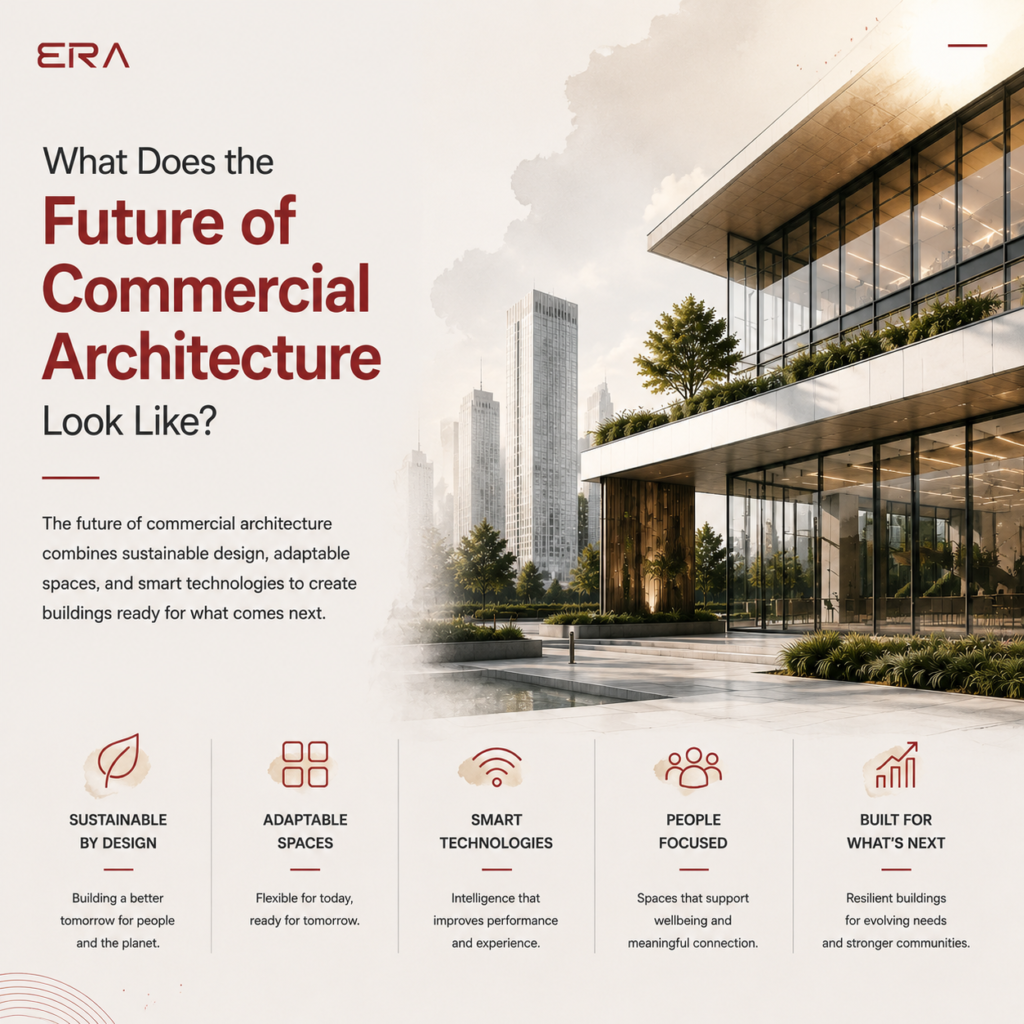
Commercial Architecture continues to evolve as businesses respond to changing technologies, environmental priorities, and shifting expectations from employees, customers, and communities. Today’s commercial buildings are expected to be more adaptable, energy efficient, and people centered than ever before. Architects are designing spaces that not only support current business needs but also remain resilient in a rapidly changing world.
Sustainability is becoming a standard rather than a feature. Energy efficient building systems, passive design strategies, renewable energy technologies, and environmentally responsible materials are helping reduce environmental impact while lowering operating costs. Many commercial developments also pursue green building certifications, reflecting a growing commitment to long term environmental performance and healthier built environments.
Businesses are demanding greater flexibility. Hybrid workplaces, changing consumer behavior, and evolving operational models require commercial spaces that can adapt over time. Flexible floor plans, multifunctional areas, and mixed-use developments allow buildings to respond to future growth without extensive renovation, helping businesses remain agile in a changing market.
Technology is reshaping how buildings operate. Intelligent lighting, climate control, security systems, occupancy monitoring, and integrated building management platforms improve efficiency while enhancing comfort and safety. As smart technologies become increasingly common, commercial buildings are evolving into connected environments that support better decision making and day to day operations.
The Future of Commercial Architecture
Commercial Architecture is no longer defined solely by the buildings it creates, but by the value those buildings deliver over time. As businesses evolve, commercial spaces must respond with greater flexibility, stronger environmental performance, and experiences that support both people and business objectives. Architecture is increasingly expected to anticipate change rather than simply accommodate it.
Looking ahead, the most successful commercial projects will combine thoughtful design, sustainable practices, and intelligent technologies to create environments that remain relevant for decades. Whether designing an office, retail destination, hospitality venue, or mixed-use development, the goal remains the same: to create spaces that help businesses thrive while contributing positively to the communities they serve.
From Our Studio
At ERA Render, we design commercial spaces that balance business objectives, user experience, and architectural quality. From offices and retail environments to hospitality developments, our approach combines strategic planning, thoughtful design, and high-quality visualization to help clients bring their projects to life with confidence.
Explore our portfolio to see how we transform commercial concepts into spaces that are functional, engaging, and built for long term success.
Further Reading
If you’d like to explore Commercial Architecture in greater depth, these books and industry resources offer valuable insights into design principles, workplace strategy, sustainable development, and the future of commercial buildings.
- Francis D. K. Ching – Building Construction Illustrated
- Richard Saxon – The Story of British Commercial Architecture
- International WELL Building Institute (IWBI) – Resources on healthy building design and workplace environments
- U.S. Green Building Council (USGBC) – LEED guidance and sustainable commercial building practices
- The Urban Land Institute (ULI) – Research and publications on commercial real estate, mixed use development, and urban design