The Architectural Design Process begins long before construction starts. Every successful building is shaped through a series of thoughtful decisions that transform an idea into a functional and inspiring space. Understanding the Architecture Stages of Design reveals how architects bring creativity, strategy, and technical expertise together to create buildings that stand the test of time.
In This Article
- Where Every Great Building Begins
- The 7 Stages of the Architectural Design Process
- Great Design Is Never Linear
- Keeping Great Design on Track
- ERA Render’s Philosophy
- Further Reading
Where Every Great Building Begins
Some of the world’s most memorable buildings have one thing in common: they didn’t begin with concrete, steel, or detailed drawings. They began with questions. What should this building achieve? Who will use it? How should it respond to its surroundings? Finding the right answers is what sets the Architectural Design Process in motion.
Far more than a sequence of technical tasks, the Architectural Design Process is a creative journey that transforms ideas into places where people live, work, learn, and connect. Every decision builds on the one before it, allowing architects to balance creativity with functionality while responding to the unique needs of each project.
At the heart of this journey are the Architecture Design Process. Each stage has a distinct purpose, helping architects explore possibilities, solve complex challenges, coordinate with consultants, and refine every detail before construction begins. While every project follows its own path, a well-structured process reduces uncertainty, encourages collaboration, and leads to stronger design outcomes.
Understanding where every great building begins offers more than insight into an architect’s workflow. It reveals the careful thinking behind architecture that doesn’t simply look impressive, it performs beautifully, adapts to its surroundings, and continues to serve people for years to come.
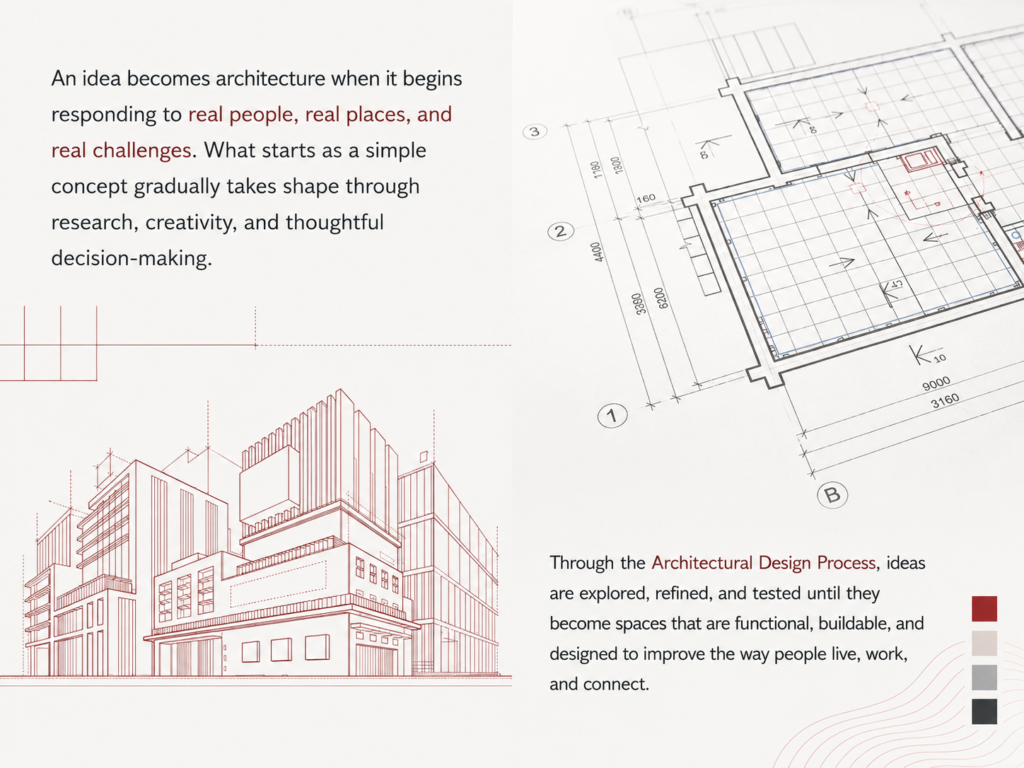
The 7 Stages of the Architectural Design Process
Every remarkable building begins as an idea, but ideas alone don’t create architecture. They need to be explored, tested, refined, and carefully developed before they become places where people live, work, and connect. That’s where the Architectural Design Process provides its greatest value.
Although every project is unique, architects generally follow seven key Architecture Stages of Design. Each stage builds upon the one before it, guiding the project from the earliest conversations to a completed building ready to be experienced. While the process may evolve along the way, these stages provide a reliable framework that balances creativity, technical expertise, and thoughtful decision-making.
Let’s explore the seven stages that shape every successful architectural project.
1. Every Great Project Starts with Understanding (Pre-Design Phase)
Before a single line is drawn, architects focus on understanding the project itself. The Pre-Design Phase is where conversations replace drawings, allowing architects to define the client’s goals, understand the project’s purpose, establish budgets, identify constraints, and study the site’s unique opportunities.
This stage in Architectural Design Process also includes researching planning regulations, environmental conditions, site access, and surrounding context. These early discoveries influence every decision that follows, making pre-design one of the most important Architecture Stages of Design.
A successful project begins with clarity. The more thoroughly a project is understood at this stage, the stronger every design decision becomes throughout the rest of the Architectural Design Process.
2. Turning Ideas into a Design Vision (Concept Design Phase)
With a clear understanding of the project’s goals, creativity begins to take the lead. During the Concept Design Phase, architects explore different ways the building could respond to its site, function, and the people who will use it. This stage is driven by exploration rather than certainty, encouraging ideas to develop before a final direction is chosen.
Through sketches, diagrams, massing studies, and early three-dimensional models, architects test different possibilities and gradually refine the project’s overall vision. Rather than searching for the first solution, they explore many options until the design begins to reflect both the client’s aspirations and the unique character of the site.
By the end of this phase, the project has a clear design direction that serves as the foundation for everything that follows in the Architectural Design Process.
3. Giving Shape to the Vision (Schematic Design Phase)
With a clear design direction established, the project begins to take on a recognizable form. During the Schematic Design Phase, architects develop preliminary floor plans, elevations, building layouts, and three-dimensional studies that communicate how the building will function and relate to its surroundings.
This is often the first time a project begins to feel real. What started as conversations, sketches, and ideas now takes on a recognizable form, allowing clients to visualize the building, experience its spaces, and confidently shape its future alongside the design team.
As feedback is gathered from clients and consultants, the design continues to evolve, ensuring that both creativity and practicality remain in balance before moving into more detailed development.
4. Refining Every Detail (Design Development Phase)
Once the overall design has been approved, attention shifts from exploring ideas to refining them. During the Design Development Phase, architects develop the building’s materials, structural systems, interior layouts, façade details, and technical requirements with much greater precision.
Collaboration becomes increasingly important as architects coordinate closely with structural, mechanical, electrical, and plumbing consultants. Every decision is carefully evaluated to ensure the project remains functional, buildable, and aligned with the client’s vision and budget.
By the end of this stage, the design has evolved from a concept into a comprehensive architectural solution that is ready for detailed documentation.
5. Preparing Every Detail for Construction (Construction Documents Phase)
A successful design can only become a successful building when it’s communicated clearly. During the Construction Documents Phase, architects produce the detailed drawings, specifications, schedules, and technical information required for permits, pricing, and construction.
These documents provide builders with precise instructions, reducing uncertainty and helping everyone involved work from the same vision. Accuracy at this stage minimizes costly misunderstandings and ensures the finished building reflects the original design intent.
6. Choosing the Right Team to Build It (Bidding Phase)
Even the strongest design depends on the people who bring it to life. During the Bidding Phase in Architectural Design Process, contractors review the construction documents, prepare cost estimates, and submit proposals for the project.
Architects often assist clients by answering technical questions, evaluating bids, comparing construction approaches, and helping select the contractor best suited to deliver the project. The goal isn’t simply to find the lowest price, but to choose a team capable of achieving the desired quality, budget, and timeline.
7. Bringing the Vision to Life (Construction Administration Phase)
Construction marks the beginning of a new chapter in the Architectural Design Process. During the Construction Administration Phase, architects continue working alongside contractors, consultants, and clients to ensure the design is executed as intended.
Site visits, shop drawing reviews, technical clarifications, and regular coordination help resolve challenges as construction progresses. Rather than simply observing the work, architects actively protect the integrity of the design while helping the project adapt to real-world conditions.
When the final details are complete, the Architectural Design Process reaches its ultimate goal, not simply finishing a building, but creating a place that fulfills the vision established from the very first conversation.
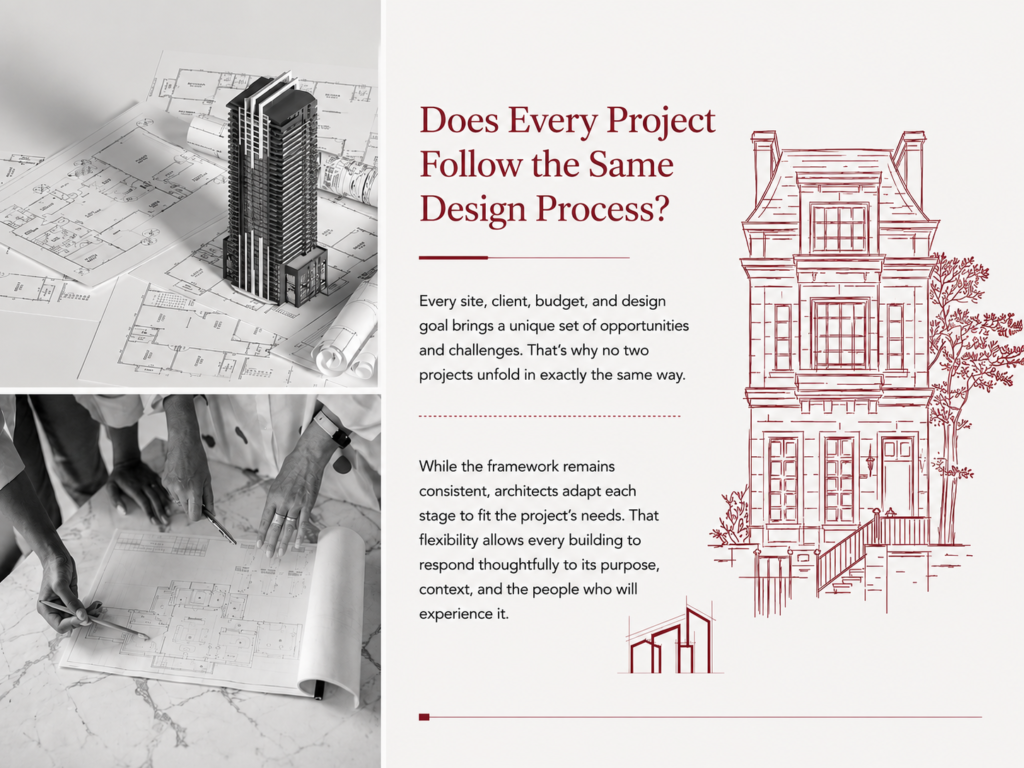
Great Design Is Never Linear
If the Architectural Design Process were as simple as moving from one stage to the next, every project would follow the same predictable path. In reality, great architecture is shaped through constant refinement. Ideas evolve, new challenges emerge, and every decision has the potential to improve the final outcome.
Throughout the Architecture Stages of Design, architects regularly revisit earlier ideas as projects develop. A site visit may inspire a different layout, client feedback can reshape the design vision, or technical coordination might uncover opportunities that hadn’t been considered before. Rather than viewing these moments as setbacks, they’re embraced as part of the creative process.
This flexibility is what makes the Architectural Design Process so effective. While the seven stages provide structure, they also leave room for exploration, collaboration, and thoughtful decision-making. Architects aren’t simply completing tasks, they’re continuously refining a design until every element works together as one cohesive whole.
The most successful projects don’t follow a perfectly straight line. They evolve through curiosity, communication, and a willingness to improve every idea before it becomes part of the built environment. That’s what transforms a good design into exceptional architecture.
Keeping Great Design on Track
The strongest projects aren’t those that avoid every obstacle. They’re the ones that stay focused on the original vision while remaining flexible enough to adapt when necessary. Throughout the Architecture Stages of Design, thoughtful communication, careful planning, and a willingness to refine ideas help keep the project moving in the right direction.
The following principles help ensure great design stays on course from the first conversation to the final walkthrough.
Every Great Project Starts with a Clear Vision
Every successful building begins with a shared understanding of what the project is trying to achieve. When architects and clients establish clear goals from the beginning, every decision throughout the Architectural Design Process has a stronger sense of purpose. A clear vision becomes the foundation that guides creativity without limiting it.
Good Design Can’t Be Rushed
The best ideas rarely appear overnight. They evolve through exploration, discussion, and continuous refinement. Allowing enough time for each of the Architecture Stages of Design gives architects the freedom to test ideas, solve problems, and create solutions that are both functional and inspiring.
Let the Site Tell the Story
No two sites are ever the same. Sunlight, climate, landscape, surrounding buildings, and local context all influence how architecture should respond. Rather than forcing a design onto a site, experienced architects allow the site’s unique character to shape the project, creating buildings that feel connected to their environment.
Read more about the importance of Site Planning here
Great Architecture Is a Conversation
Architecture is never created in isolation. Every discussion with a client, engineer, consultant, or contractor contributes to a better outcome. Open communication encourages collaboration, uncovers new ideas, and helps solve challenges before they become costly changes later in the project.
Great Buildings Do More Than Look Beautiful
Beautiful architecture should also feel effortless to use. The most memorable buildings combine aesthetics with comfort, functionality, sustainability, and long-term performance. When people enjoy living, working, or gathering within a space, that’s often the clearest sign of a successful Architectural Design Process.
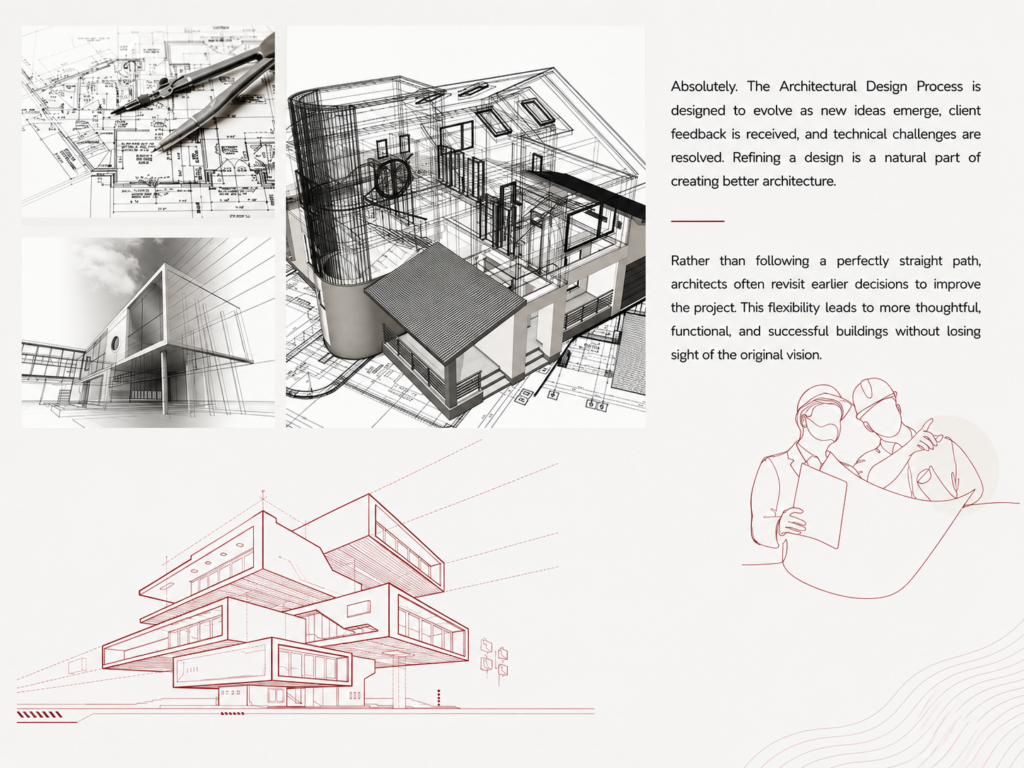
ERA Render’s Philosophy
At ERA Render, we believe exceptional architecture is never the result of a single idea or a single moment of inspiration. It’s the outcome of a thoughtful Architectural Design Process that brings together creativity, technical expertise, collaboration, and a deep understanding of the people who will experience the space.
Every project begins with listening. Before drawings, models, or renderings, we take the time to understand our clients’ goals, the character of the site, and the story each project has the potential to tell. From there, every design decision is made with purpose, ensuring beauty and functionality evolve together rather than compete with one another.
We also believe the best architecture isn’t measured only by how it looks on completion day. Its true success is revealed over time, through the way people move through a space, how naturally it supports everyday life, and how well it continues to serve its purpose for years to come.
Whether we’re designing a private residence, a commercial environment, or creating architectural visualizations that help bring ideas to life, our commitment remains the same: to create architecture that is thoughtful, timeless, and designed around people.
Because great buildings aren’t defined by the moment they’re built. They’re defined by the lives they shape long after the construction is complete.
Further Reading
The Architectural Design Process combines creativity, technical expertise, and collaboration at every stage of a project. The following resources provide valuable insight into how architects develop ideas, coordinate design, and bring buildings to life.
- American Institute of Architects — The Architect’s Handbook of Professional Practice
- Royal Institute of British Architects — RIBA Plan of Work 2020
- Francis D. K. Ching — Building Construction Illustrated
- Design Methods — Bryan Lawson, Nigel Cross, Christopher Alexander
- Osamu A. Wakita & Richard M. Linde — The Professional Practice of Architectural Working Drawings