Architecture Design Principles influence every building we experience, from homes and offices to museums and public spaces. They guide the decisions that shape how a space looks, feels, and functions. In this guide, we’ll explore the key principles behind thoughtful architectural design and why they continue to matter in every project.
In This Article
- Understanding Architecture Design Principles
- Design Principles and Design Elements: What’s the Difference?
- The Principles Behind Exceptional Architecture
- Refining the Architectural Experience
- Bringing Architecture Design Principles into Practice
- Architecture Design Principles in Iconic Buildings
- Common Mistakes When Applying Architecture Design Principles
- From Our Studio
- Further Reading
Understanding Architecture Design Principles
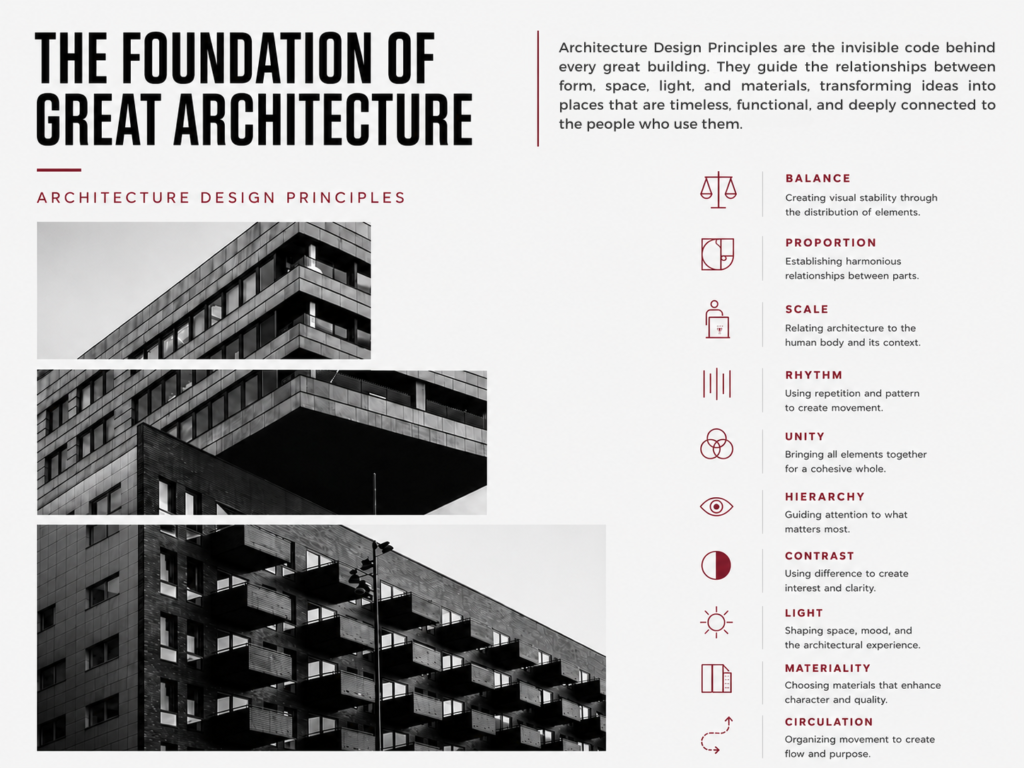
Successful buildings are built upon Architecture Design Principles that guide the decisions architects make to achieve the right balance of aesthetics, functionality, and user experience. Rather than limiting creativity, these principles provide a framework for transforming ideas into spaces that are purposeful, balanced, and designed around the people who use them.
From the earliest concept sketches to the final details, these principles influence every stage of the design process. They help architects organize elements such as form, proportion, scale, light, materials, and circulation into a cohesive design that satisfies both practical needs and aesthetic goals. While every project presents unique challenges, the principles themselves remain timeless.
Understanding Architecture Design Principles also changes the way we experience the built environment. Instead of simply seeing a building, you begin to recognize the thinking behind it, why one space feels inviting, why another feels spacious, or how thoughtful planning encourages people to move naturally through a building. They transform architecture from a collection of walls and materials into places that people enjoy, remember, and connect with.
Design Principles and Design Elements: What’s the Difference?
Although they’re often mentioned together, design principles and design elements play different roles in architecture. Understanding the difference is essential because architects rely on both to create spaces that are visually appealing, functional, and well organized.
Think of design elements as the building blocks of a design. They include components such as line, shape, form, space, color, texture, light, and material. These are the individual parts that make up a building or interior.
Design principles, on the other hand, determine how those elements are arranged and connected. Principles such as balance, proportion, rhythm, hierarchy, and contrast help architects organize design elements into a cohesive composition. Rather than focusing on the individual components themselves, they define the relationships between them to create spaces that feel comfortable, functional, and visually balanced.
A simple way to think about it is this: design elements are what architects work with, while design principles are how they use those elements. Together, they form the foundation of every architectural project, regardless of its size, style, or purpose.
The Principles Behind Exceptional Architecture
Great architecture isn’t defined by a single design decision. Instead, it’s the result of multiple principles working together to create spaces that are functional, visually engaging, and meaningful to the people who experience them.
Some principles create stability, others establish harmony, while others influence how we move through a building or connect with a space emotionally. Together, they form the foundation of exceptional architecture and continue to guide architects across every project type and design style.
1. Creating Balance in Architecture
Some buildings immediately feel calm, welcoming, and well composed, even if you can’t explain why. Others can feel awkward or visually overwhelming, despite having impressive materials or striking forms. In many cases, the difference comes down to one of the most essential Architecture Design Principles: balance.
Balance creates visual stability. Whether achieved through symmetry, carefully distributed forms, or the thoughtful use of light, materials, and space, it allows every part of a building to work together as a unified whole.
2. Why Proportion Matters in Architecture?
Have you ever looked at a building and felt that everything simply looked right? That sense of harmony rarely happens by chance. Through thoughtful proportion, architects create relationships between spaces and architectural elements that feel natural, comfortable, and visually refined.
From room dimensions and ceiling heights to windows and structural elements, proportion influences nearly every design decision. When these relationships are carefully considered, architecture feels balanced without demanding attention.
3. The Power of Scale in Architectural Design
Architecture is experienced through the human body. Whether a space feels intimate, spacious, or monumental often depends on its scale.
Unlike proportion, which focuses on the relationship between different elements, scale considers how a building relates to people and its surroundings. Choosing the right scale helps architects create spaces that feel welcoming, inspiring, and appropriate for their purpose.
4. Creating Rhythm Through Design
Just as rhythm gives structure to music, it brings continuity and movement to architecture. Through the repetition of forms, structural elements, materials, or openings, architects guide the eye across a building and strengthen the overall composition.
When used thoughtfully, rhythm creates a natural flow that makes architecture easier to understand and more enjoyable to experience.
5. Achieving Unity and Harmony
A successful building feels complete because every element contributes to the same vision. Materials, proportions, forms, lighting, and spatial relationships all work together to create a cohesive experience.
Unity and harmony ensure that no feature feels disconnected, allowing architecture to communicate a clear identity while providing a comfortable and memorable experience.
Refining the Architectural Experience
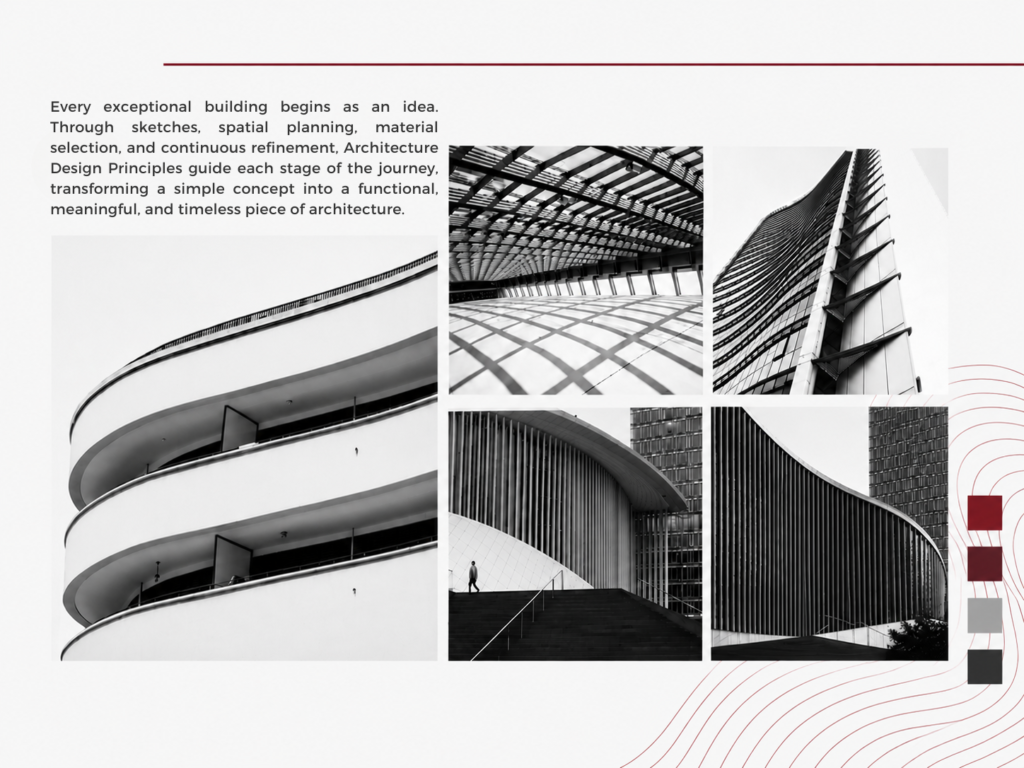
The principles above establish the foundation of a successful design, but great architecture often goes a step further. Architects refine the experience through additional principles that influence perception, movement, and visual interest, adding depth and character to every project.
Establishing Hierarchy
Hierarchy helps direct attention toward the most important spaces and architectural features. Through differences in scale, form, lighting, or material, architects create a clear visual order that makes buildings easier to navigate and understand.
Using Contrast to Create Visual Interest
Contrast introduces variety by combining opposing qualities such as light and shadow, solid and void, rough and smooth textures, or traditional and contemporary materials. It prevents monotony while highlighting the features that deserve attention.
Creating Meaningful Focal Points
Every memorable building has moments that naturally draw the eye. A dramatic staircase, a framed view, or a carefully positioned entrance can become a focal point that gives a space identity and purpose.
Guiding Movement Through Space
Architecture isn’t experienced from a single viewpoint, it’s experienced through movement. Carefully planned circulation, sightlines, and transitions help people move naturally through a building while creating a sequence of memorable spaces.
Symmetry and Asymmetry
Symmetry creates a sense of order and formality, while asymmetry often introduces energy and creativity. Both approaches can achieve visual balance when used intentionally, and architects frequently choose between them based on the project’s character and purpose.
Bringing Architecture Design Principles into Practice
Understanding Architecture Design Principles is only the beginning. The real challenge lies in applying them throughout the design process, where every decision influences the final outcome.
Rather than treating each principle separately, architects combine them continuously, from analyzing the site and organizing spaces to selecting materials and refining details. The result is a building where aesthetics, functionality, and human experience work together as one cohesive design.
In the following sections, we’ll explore how these principles come to life in real projects and why they remain essential to creating architecture that stands the test of time.
Architecture Design Principles in Iconic Buildings
One of the best ways to understand Architecture Design Principles is to see them in real buildings. While every project has its own purpose and design language, the world’s most celebrated works of architecture demonstrate how these principles come together to create spaces that remain timeless and influential.
Fallingwater | Balance and Harmony with Nature
Designed by Frank Lloyd Wright, Fallingwater is often celebrated for the way it integrates architecture with its natural surroundings. Through carefully balanced horizontal forms, natural materials, and thoughtful proportions, the house appears to grow from the landscape rather than sit on top of it.
Villa Savoye | Proportion and Spatial Flow
Le Corbusier’s Villa Savoye demonstrates how proportion, rhythm, and circulation can shape the experience of a building. Its open floor plan, clean geometry, and carefully organized spaces continue to influence modern architecture around the world.
Barcelona Pavilion | Simplicity and Balance
Although minimal in appearance, the Barcelona Pavilion relies on precise proportions, balanced composition, and carefully selected materials to create a calm and elegant environment. It proves that simplicity often requires extraordinary attention to detail.
Sydney Opera House | Rhythm and Movement
The Sydney Opera House is instantly recognizable because of its repeating shell-like forms. Its sculptural roof creates a powerful sense of rhythm while giving the building a distinctive identity that has become one of the world’s most famous architectural landmarks.
Each of these projects demonstrates that exceptional architecture rarely depends on a single principle. Instead, great buildings combine multiple Architecture Design Principles to create spaces that are functional, memorable, and meaningful.
Common Mistakes When Applying Architecture Design Principles
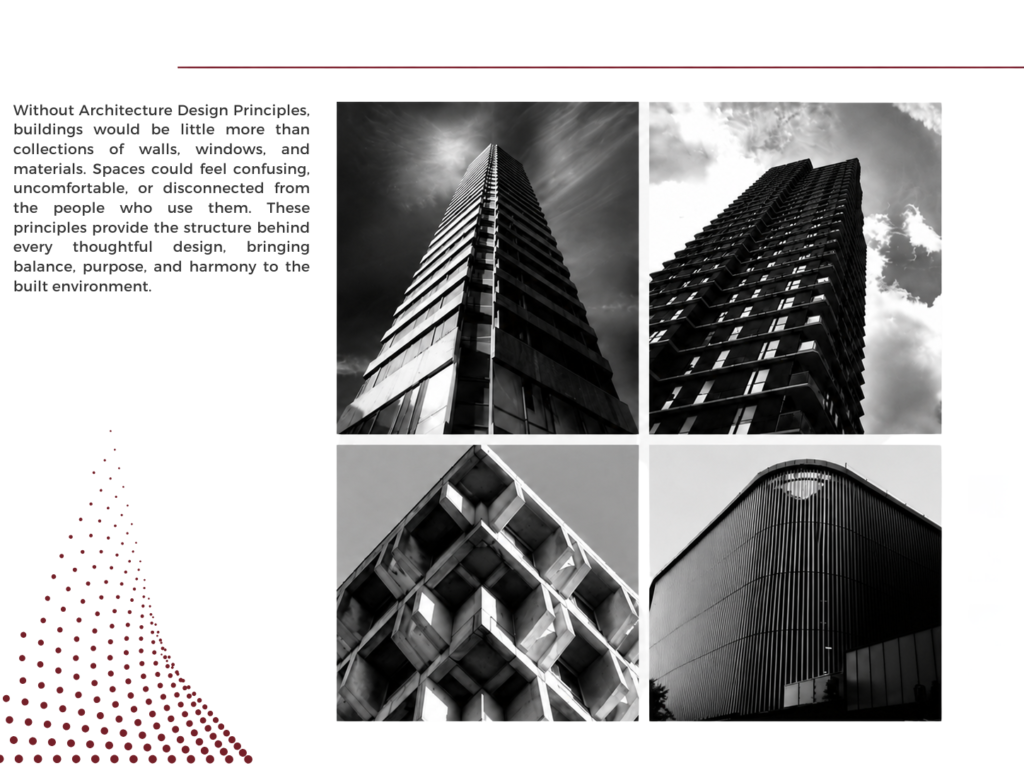
Even the strongest architectural concepts can lose their impact when design principles aren’t applied thoughtfully. Avoiding these common mistakes helps create buildings that are not only visually appealing but also comfortable and practical to use.
Ignoring Human Scale
Designing impressive spaces is important, but buildings should always relate to the people who use them. Oversized or poorly scaled spaces can feel uncomfortable and disconnected.
Prioritizing Appearance Over Function
A beautiful design should also perform well. Successful architecture balances visual appeal with functionality, circulation, accessibility, and everyday usability.
Overusing Symmetry
Symmetry creates order, but relying on it everywhere can make a building feel repetitive or predictable. Introducing contrast and variation often creates a more engaging experience.
Using Too Many Materials
A wide variety of materials doesn’t necessarily create a richer design. Limiting the material palette often produces stronger visual unity and a clearer architectural identity.
Forgetting the Importance of Light
Natural light is one of the most powerful design tools available to architects. Ignoring daylight can reduce comfort, increase energy consumption, and diminish the quality of interior spaces.
From Our Studio
Great architecture is about much more than creating attractive buildings. It’s the result of thoughtful decisions that balance aesthetics, functionality, context, and the needs of the people who experience each space. Architecture Design Principles provide the framework that helps architects make those decisions with purpose and clarity.
Although architectural styles, technologies, and construction methods continue to evolve, these principles remain just as relevant today as they have for centuries. They influence everything from the earliest concept sketches to the smallest design details, shaping buildings that are not only visually compelling but also practical, comfortable, and enduring.
Whether you’re an architect, a student, or simply someone who appreciates great design, understanding these principles offers a new perspective on the built environment. The next time you walk through a building or admire a landmark, you’ll be able to recognize the thoughtful decisions that transform ordinary structures into exceptional architecture.
Further Reading
Architecture is a lifelong learning journey, and no single article can cover every perspective. If you’d like to explore these ideas in greater depth, the following books have shaped architectural thinking for decades and continue to inspire designers around the world.
- Francis D. K. Ching — Architecture: Form, Space, and Order
- Simon Unwin — Analysing Architecture
- Christopher Alexander — A Pattern Language
- Matthew Frederick — 101 Things I Learned in Architecture School
- Francis D. K. Ching — A Visual Dictionary of Architecture