


Every great building begins with an idea, but it’s the Architecture Materials that bring that vision to life. From natural stone and timber to steel, glass, and concrete, every material influences a building’s appearance, performance, durability, and the way people experience the space.
In this guide, you’ll explore the most common Architecture Materials, discover how architects select Architectural Building Materials for different projects, and learn why material choices are one of the most important decisions in architectural design.
In This Article
- What Are Architecture Materials?
- Types of Architecture Materials
- Every Material Tells a Different Story
- Choosing the Right Material for the Right Purpose
- The Future of Architecture Materials
- From Our Studio
- Further Reading
What Are Architecture Materials?
Every building is made from a carefully selected combination of Architecture Materials, each chosen for a specific purpose. Some provide structural strength, others improve energy efficiency, while many contribute to the building’s appearance and overall character. From the concrete beneath our feet to the glass that fills a space with natural light, every material plays a role in shaping how a building performs and how people experience it.
Architectural Building Materials are much more than construction products, they’re design tools. Architects consider durability, climate, sustainability, cost, and aesthetics when selecting materials, ensuring that every choice supports both the function and the vision of the project. The right material in the right place can improve comfort, reduce maintenance, and create spaces that remain beautiful for decades.
Today’s Architecture Materials are more diverse than ever before. Alongside traditional options such as brick, timber, and natural stone, architects now work with advanced composites, engineered wood products, recycled materials, and high-performance glass. Understanding the strengths of each material is the foundation of good architectural design and one of the key decisions behind every successful building.
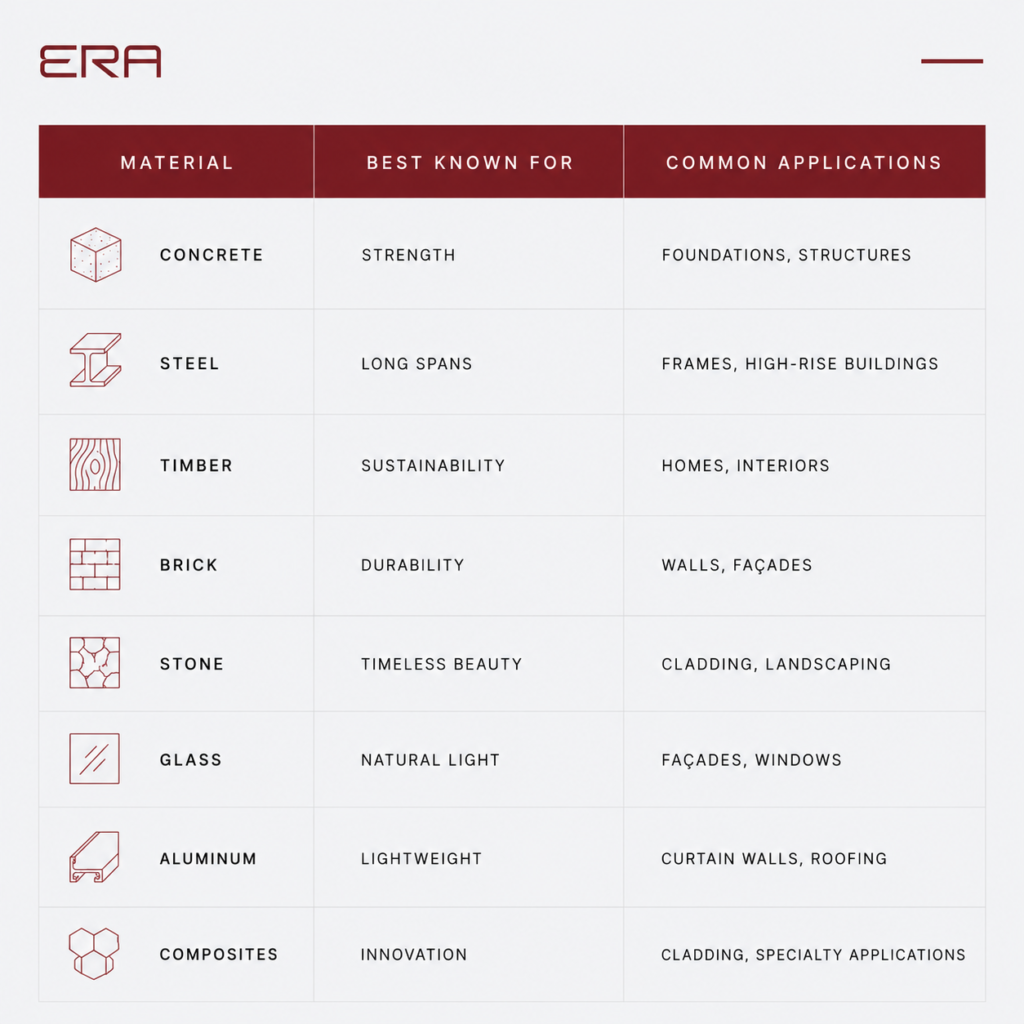
Types of Architecture Materials
No single material can meet every requirement of a building. Instead, architects combine different Architecture Materials to achieve the right balance of strength, durability, sustainability, aesthetics, and performance. Every project relies on a carefully selected combination of Architecture Building Materials, with each one serving a specific purpose in the overall design.
Understanding the main categories of Architecture Building Materials makes it easier to see why every successful building depends on more than just one material.
Natural Materials
Natural Architecture Materials are sourced directly from nature with minimal processing. Materials such as timber and natural stone have been used for centuries because of their durability, beauty, and connection to the surrounding environment. They continue to play an important role in sustainable architecture and timeless design.
Masonry Materials
Masonry Architecture Building Materials include brick, concrete blocks, and stone units that are assembled to create strong, durable walls and structures. Known for their longevity and thermal performance, masonry materials remain one of the most reliable choices in residential and commercial construction.
Metal Materials
Steel and aluminum are among the most important Architecture Materials used in modern construction. Their exceptional strength, flexibility, and durability allow architects to design larger spans, taller buildings, and lighter structural systems while maintaining long-term performance.
Concrete & Cement-Based Materials
Concrete is one of the world’s most widely used Architecture Building Materials, valued for its strength, versatility, and ability to take almost any form. From reinforced concrete to precast systems, this category forms the structural backbone of countless buildings and infrastructure projects.
Glass Materials
Glass has transformed the way buildings interact with light and their surroundings. Modern Architecture Materials now include high-performance glazing systems that improve energy efficiency while creating bright, open spaces with stronger visual connections between the interior and exterior.
Composite & Engineered Materials
Advances in technology have introduced a new generation of Architecture Building Materials, including engineered timber, fiber cement panels, composite cladding, and glass fiber reinforced concrete. These innovative materials combine performance, durability, and design flexibility to meet the demands of contemporary architecture.
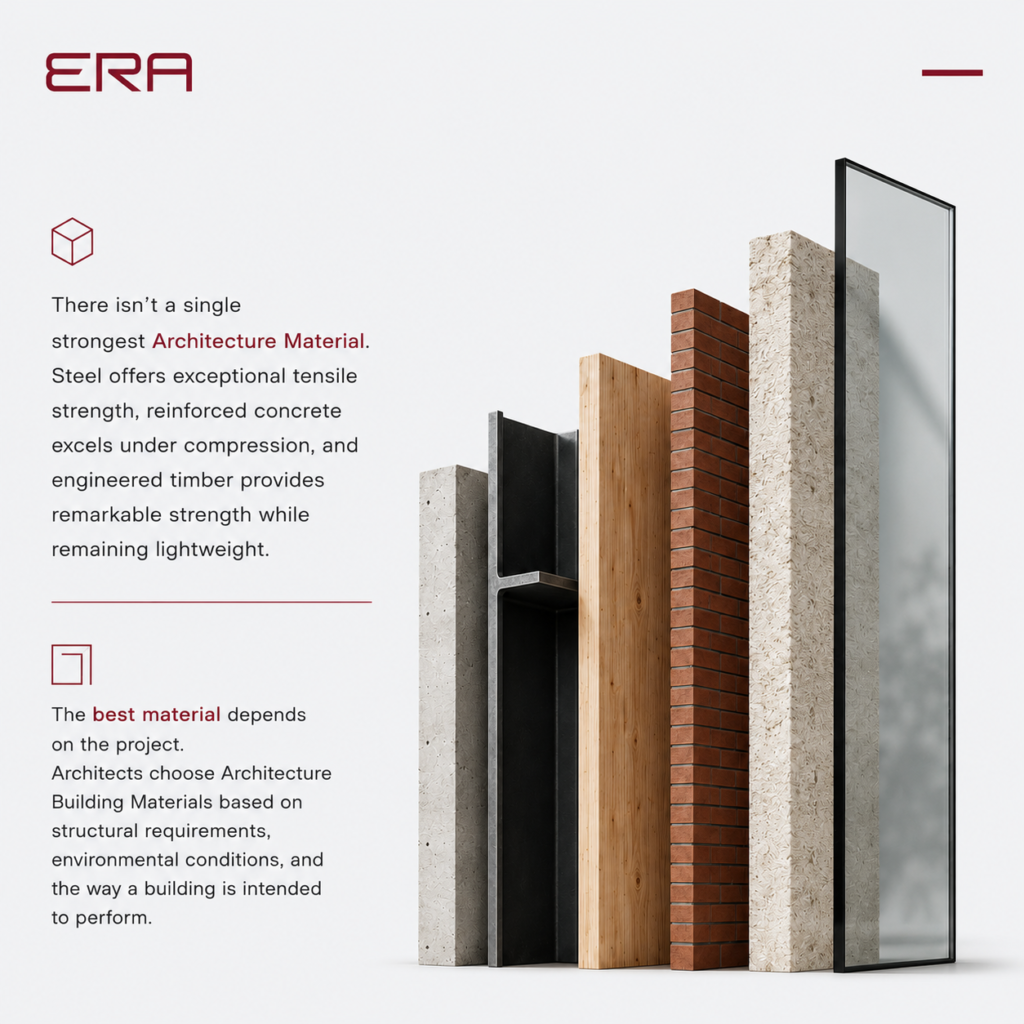
Every Material Tells a Different Story
Every building is a combination of carefully selected Architecture Materials, each contributing something unique to the final design. Some materials provide the structural strength that keeps a building standing, while others improve energy efficiency, reduce maintenance, or create a specific visual character.
As technology continues to evolve, architects have more choices than ever before. Traditional Architecture Materials such as brick, timber, and natural stone remain as relevant as ever, while modern innovations continue to expand what’s possible in architectural design. Let’s take a closer look at the materials that shape the buildings around us.
Concrete: The Foundation of Modern Construction
Concrete is one of the most widely used Architecture Materials, forming the structural backbone of everything from homes and skyscrapers to bridges and public infrastructure. Its exceptional strength, durability, and versatility have made it one of the most important Architecture Building Materials in the world.
One of concrete’s greatest advantages is its flexibility. It can be poured into almost any shape, finished in a variety of textures, or left exposed to create the clean, minimalist aesthetic often seen in contemporary architecture. When combined with steel reinforcement, concrete becomes even stronger, allowing architects to design larger spans and more complex structures.
Steel: Strength Meets Flexibility
Steel has revolutionized modern construction by making taller buildings, wider open spaces, and more innovative structural systems possible. Among today’s Architecture Building Materials, steel offers one of the highest strength-to-weight ratios, allowing buildings to remain both strong and efficient.
Beyond its structural performance, steel is highly recyclable and adaptable, making it a popular choice for sustainable architecture. Whether hidden inside a building’s frame or celebrated as an exposed design feature, steel continues to shape some of the world’s most iconic buildings.
Timber: Nature’s Timeless Building Material
Timber has been used for centuries, yet it remains one of the most versatile Architecture Materials available today. Its natural warmth, texture, and renewable qualities make it a favorite for homes, public spaces, and contemporary architecture alike.
Modern engineered wood products have transformed timber into one of the most advanced Architecture Building Materials, allowing architects to design larger, stronger, and more sustainable buildings while maintaining a close connection to nature.
Brick: Built to Stand the Test of Time
Brick has earned its reputation through centuries of reliable performance. As one of the most trusted Architecture Building Materials, it offers durability, thermal efficiency, and a timeless appearance that suits both traditional and modern architecture.
Available in countless colors, textures, and patterns, brick gives architects the flexibility to create buildings with lasting character while benefiting from one of history’s most dependable Architecture Materials.
Natural Stone: Beauty Shaped by Nature
Natural stone has symbolized permanence and craftsmanship for thousands of years. Whether it’s granite, limestone, marble, or slate, this timeless Architecture Material combines exceptional durability with a unique natural appearance that cannot be replicated.
Because every piece of stone is different, architects often use it to add depth, texture, and authenticity to both contemporary and traditional buildings, making it one of the most distinctive Architecture Building Materials available.
Glass: Bringing Light into Architecture
Glass has transformed the relationship between buildings and their surroundings. As one of the most innovative Architecture Materials, it allows natural light to fill interior spaces while creating stronger visual connections between indoors and outdoors.
Today’s high-performance glazing systems make glass one of the most advanced Architecture Building Materials, improving energy efficiency, thermal comfort, and acoustic performance without sacrificing transparency or design freedom.
Aluminum: Lightweight, Durable, and Versatile
Aluminum has become a key material in modern architecture thanks to its light weight, corrosion resistance, and design flexibility. It’s widely used for façades, curtain walls, windows, roofing systems, and architectural detailing.
As one of the most sustainable Architecture Building Materials, aluminum can be recycled repeatedly without losing its quality, making it an increasingly important choice for environmentally conscious projects.
Composite Materials: Built for the Future
Composite materials combine two or more materials to create products with improved strength, durability, and performance. They represent one of the fastest-growing categories of Architecture Materials, giving architects greater freedom to design innovative buildings while meeting modern construction demands.
From fiber cement panels and engineered timber to glass fiber reinforced concrete, today’s Architecture Building Materials continue to evolve, proving that innovation is becoming just as important as tradition in shaping the future of architecture.
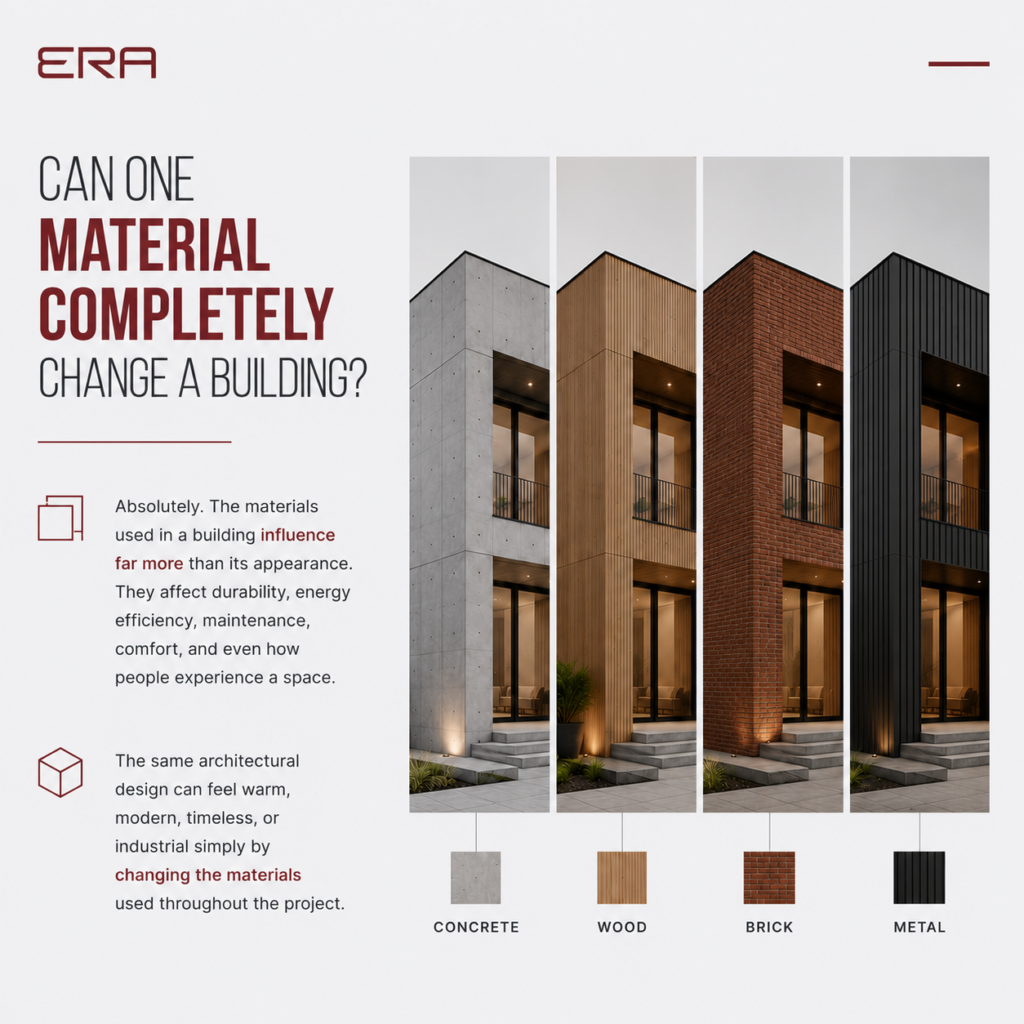
Choosing the Right Material for the Right Purpose
Selecting the right Architecture Materials is one of the most important decisions an architect makes. Every material influences how a building performs, how long it lasts, and how people experience the space. Rather than choosing materials based on appearance alone, architects carefully evaluate function, climate, sustainability, budget, and long-term performance to create buildings that are both beautiful and practical.
Function comes first. While aesthetics play an important role, a material should always support the purpose of the building before it defines its appearance. A commercial building may require the structural strength of steel, while a residential home may benefit from the warmth and natural character of timber. The best Architecture Building Materials successfully balance performance with design, ensuring that every choice contributes to both form and function.
Climate matters. Materials respond differently to heat, humidity, rainfall, sunlight, and changing weather conditions. A solution that performs exceptionally well in one region may not be suitable in another. By selecting Architecture Materials that work with the local environment, architects improve energy efficiency, durability, and long-term comfort while reducing maintenance requirements.
Think long term. Material selection isn’t just about today’s construction costs, it’s about how a building will perform over the next several decades. Architects consider maintenance, lifespan, sustainability, and lifecycle costs when choosing Architecture Building Materials, recognizing that durable, well-selected materials often provide greater value over time than lower-cost alternatives.
Ultimately, there is no perfect material, only the right material for the right purpose. The most successful buildings combine different Architecture Materials to respond to the project’s unique needs, creating architecture that is functional, resilient, and designed to stand the test of time.
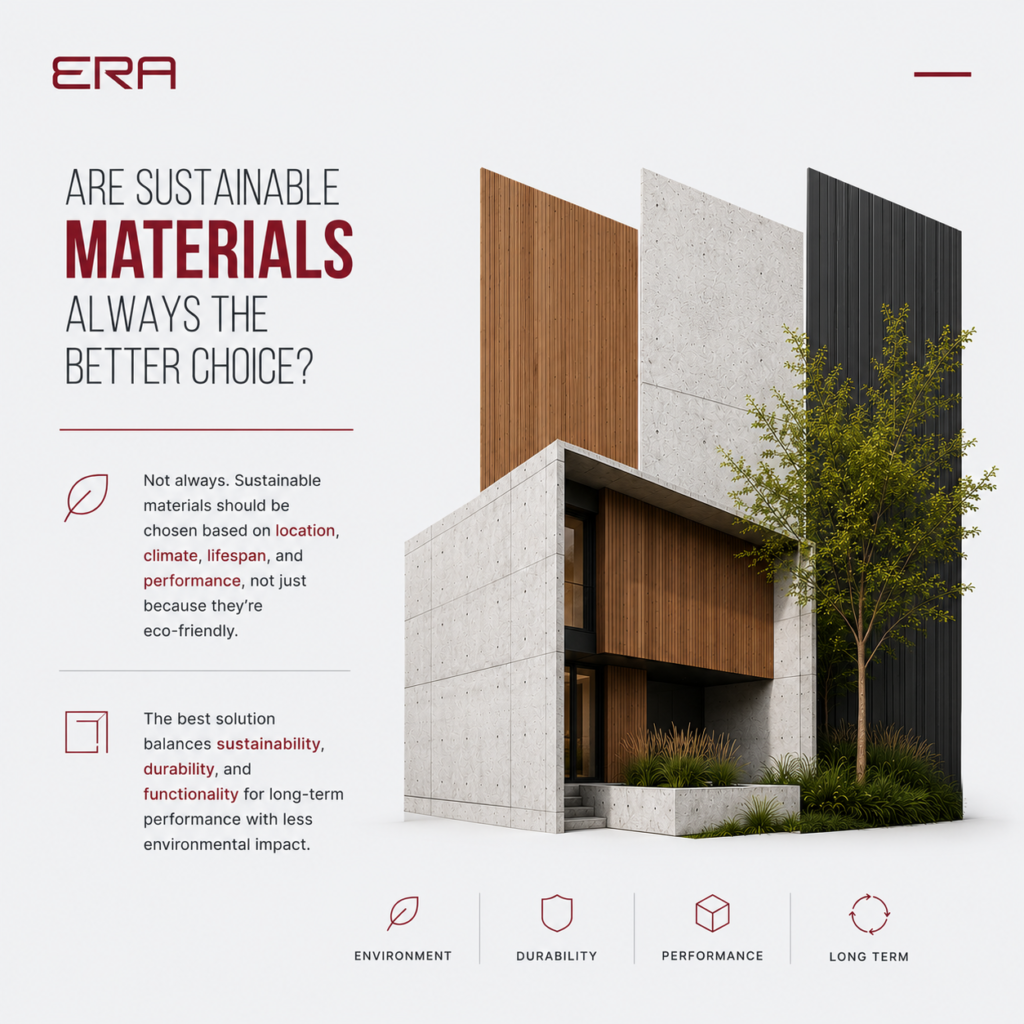
The Future of Architecture Materials
Architecture continues to evolve, and so do the Architecture Materials that shape our buildings. While traditional materials such as timber, brick, stone, and concrete remain essential, new technologies are making buildings stronger, more efficient, and more sustainable than ever before. The future isn’t about replacing proven materials, it’s about improving how they’re used.
One of the biggest changes is the growing use of sustainable Architecture Building Materials. Recycled steel, reclaimed timber, low-carbon concrete, recycled glass, and engineered wood products are helping reduce the environmental impact of construction while maintaining strength, durability, and performance.
As innovation continues, smart materials, advanced composites, and energy-efficient building systems are expanding what’s possible in architectural design. By combining timeless Architecture Materials with modern technology, architects are creating buildings that are more resilient, adaptable, and prepared for the future.
From Our Studio
At ERA Render, we believe that great architecture begins with thoughtful material selection. Every project is unique, and the Architecture Materials we choose are guided by the building’s purpose, its surroundings, and the people who will experience it every day.
Rather than following trends or relying on a single solution, we carefully combine Architecture Building Materials that balance beauty, performance, durability, and sustainability. Our goal is to create spaces that not only look exceptional but also stand the test of time, proving that great architecture is built on smart decisions as much as great ideas.
Further Reading
- Francis D. K. Ching — Building Construction Illustrated
- Edward Allen & Joseph Iano — Fundamentals of Building Construction: Materials and Methods
- Blaine Brownell — Transmaterial: A Catalog of Materials That Redefine Our Physical Environment
- Rob Thompson — Materials for Architectural Design
- Mark Weston — Materials, Form and Architecture